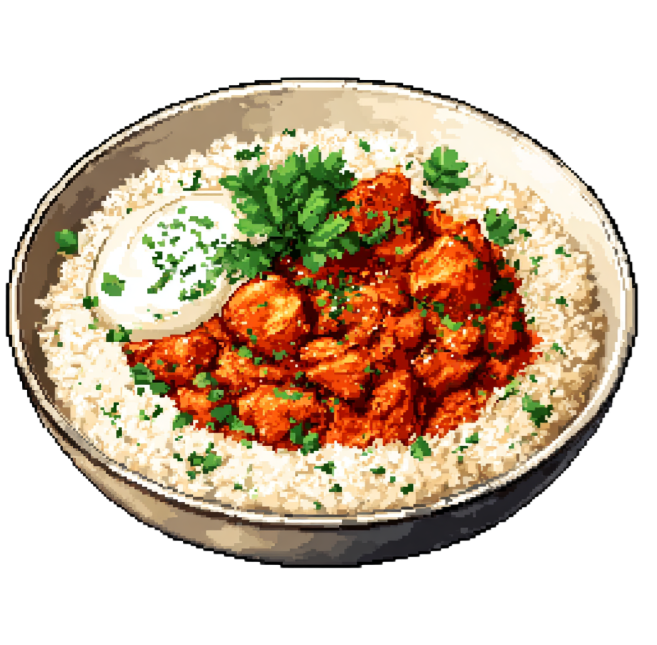
Pixel art of Indian food

Cuisine Guide

Indian Food

Twenty-eight states, hundreds of dialects of food — a guide to the dishes that anchor a cuisine you could spend a lifetime eating through.

Indian food is the world's most overrated underrated cuisine. The American chain-restaurant version is a tiny, butter-soaked sliver of what the country actually cooks — most of it North Indian, most of it Punjabi, most of it tilted toward dishes that travel well. The real cuisine fans out across 28 states, hundreds of distinct cooking traditions, and a pantry deep enough to fill several lifetimes of eating.

Spices are layered, not sprinkled. A typical home dish starts with a tadka — whole spices (cumin seeds, mustard seeds, dried chile, curry leaves) bloomed in hot oil or ghee, sometimes with onion, garlic, and ginger, before anything else goes in the pan. Garam masala, a warm spice blend of cardamom, cinnamon, clove, and pepper, often goes in at the end. The North leans on dairy — paneer, ghee, yogurt, cream. The South leans on coconut, tamarind, and curry leaf. The West (Gujarat, Maharashtra) is sweeter and more vegetarian. The East (Bengal) does fish and mustard oil.

This guide covers a wide span — Punjabi classics, South Indian breakfast staples, Mughal court cooking, Bombay street food. None of it is a complete picture, but together they give you the shape of the country.

12 Iconic Indian Dishes

Track every one in your Nomrade food passport.

Pixel art of Butter Chicken

Butter Chicken

Delhi's tomato-cream curry

Chicken pieces marinated in yogurt, ginger, garlic, and garam masala, charred in a tandoor oven, then folded into a sauce of tomato puree, cream, butter, fenugreek, and a careful spice mix. Sweetness comes from the slow-cooked tomato; richness from the cream and butter; smoke from the tandoor char. Invented at a Delhi restaurant called Moti Mahal in the 1950s as a way to use up unsold tandoori chicken — the original kitchen-recovery hack. Eaten with naan, never with cutlery if you can avoid it.

Pixel art of Biryani

Biryani

Spiced layered rice

Long-grain basmati rice and meat (lamb, chicken, goat, or fish) cooked in alternating layers, sealed under a lid of dough, and finished slowly so the rice steams in the meat's juices and absorbs every spice. Saffron, fried onions, mint, cilantro, yogurt, and whole spices (cardamom, cinnamon, bay, clove) flavor the rice. The Hyderabadi version, cooked dum-style under a sealed lid, is the most famous; Lucknow, Kolkata, and Sindh all have their own claims. Served with raita, a boiled egg, and a small bowl of meat curry.

Pixel art of Masala Dosa

Masala Dosa

South Indian fermented crepe

A thin, crispy, tangy crepe made from a fermented batter of rice and urad dal — left to bubble overnight on the counter — spread paper-thin on a hot griddle and filled with a spiced potato mash (aloo masala) of mustard seed, curry leaf, turmeric, onion, and green chile. Folded in half or rolled into a tube. Served with coconut chutney, tomato chutney, and a bowl of sambar, a tangy lentil-vegetable stew. The default Bangalore breakfast and one of the great rolled-up flatbreads anywhere.

Pixel art of Palak Paneer

Palak Paneer

Spinach and cheese curry

Fresh spinach blanched and pureed into a vivid green base, simmered with ginger, garlic, green chile, garam masala, and a swirl of cream, then folded around cubes of paneer — fresh Indian cheese with a squeaky bite that holds its shape in the sauce. The earthiness of cooked spinach gets balanced with the slight tang of the paneer. A North Indian vegetarian classic; sometimes called saag paneer when made with mixed greens including mustard greens or fenugreek.

Pixel art of Tandoori Chicken

Tandoori Chicken

Clay-oven roasted chicken

Bone-in chicken pieces marinated overnight in yogurt and a spice paste of ginger, garlic, garam masala, paprika, turmeric, lemon, and Kashmiri chili powder (which gives it that signature red-orange color), then skewered and roasted in a 900°F clay tandoor oven. The yogurt tenderizes the meat; the high, dry heat gives it a charred surface and smoky depth. Served with onion rings, lemon wedges, and mint chutney. The dish that effectively launched Punjabi cooking globally.

Pixel art of Samosa

Samosa

Fried pastry triangles

A flaky, crisp wheat-flour pastry folded into a triangle around a filling of mashed potatoes, peas, ginger, green chile, and toasted spices — cumin, coriander, garam masala, amchur (dried mango powder for tang) — then deep-fried until golden. Served with mint-cilantro chutney and tamarind-date chutney. A street food staple across the country and now a global one. The shell-to-filling ratio matters; a samosa with too thick a wrapper is a sad samosa.

Pixel art of Chicken Tikka Masala

Chicken Tikka Masala

Britain's Punjabi adoption

Pieces of marinated, char-grilled chicken (the tikka) folded into a creamy tomato curry spiced with garam masala, fenugreek, ginger, and a touch of paprika or chile. Origin debated — popularly said to have been invented in Glasgow when a customer asked for gravy on his dry tandoori chicken — but adopted everywhere. A 2001 British foreign secretary called it "Britain's true national dish." Whether you trace it to Punjab or Glasgow, it's now eaten all over the world.

Pixel art of Chole Bhature

Chole Bhature

Punjabi street brunch

A curry of chickpeas (chole) slow-cooked with onion, tomato, ginger, garlic, and a dark spice mix (cumin, coriander, garam masala, dried mango, sometimes black tea for color), served with massive deep-fried bhature — leavened white bread that puffs up balloon-like and shrinks slowly as it cools. Garnished with sliced raw onion, green chile, and lemon. A Delhi and Punjab street food staple, eaten as a heavy weekend brunch. You don't plan anything else for the day.

Pixel art of Naan

Naan

Tandoor-baked flatbread

Yogurt-and-yeast leavened white-flour bread, slapped onto the inside wall of a hot tandoor and pulled off when it bubbles and chars in spots. The yogurt gives it tang and tenderness; the tandoor gives it the leopard-spotted top and a slight smoke. Garlic naan adds minced garlic and cilantro; peshwari naan is stuffed with a sweet coconut-and-raisin paste. The North Indian default bread, served torn, used as edible utensil.

Pixel art of Dal Makhani

Dal Makhani

Creamy black lentil stew

Whole black urad lentils and red kidney beans simmered for many hours with tomato, ginger, garlic, and a final, decadent enrichment of butter and cream that goes in at the end and again at the table. The texture is the point — long cooking breaks the lentils down into something silky and almost custardy without any pureeing. A Punjabi specialty traditionally cooked overnight in tandoor coals. Pairs with naan or jeera rice. Probably the most luxurious vegetable dish anywhere.

Pixel art of Pav Bhaji

Pav Bhaji

Bombay street veg

A thick, spicy mash of mixed vegetables — potato, cauliflower, peas, carrot, tomato, capsicum — cooked down with butter, onion, ginger-garlic paste, and a special pav bhaji masala until the whole thing is thick, glossy, and brick-red. Served on a hot griddle with two soft white dinner rolls (pav) split and toasted in butter. Topped with raw onion, cilantro, and a wedge of lime. A 19th-century Bombay textile-mill workers' lunch that became a national street snack.

Pixel art of Gulab Jamun

Gulab Jamun

Milk-solid syrup balls

Small balls of khoya (dried, condensed milk solids) and flour, deep-fried in ghee until golden brown and submerged into a warm sugar syrup scented with cardamom and rose water until they soak it up like sponges. Sweet to the edge of overwhelming. Served warm, often with vanilla ice cream or a touch of saffron. The closing dessert of countless Indian dinners; the default sweet at weddings and Diwali. The best ones bleed syrup when bitten.

How Indian Eat

Most Indian meals are built around the thali — a metal platter or banana leaf with several small bowls (katoris) of dal, sabzi (vegetable), curd, pickle, chutney, and sometimes meat, plus a portion of rice and a stack of breads. You eat with your right hand, breaking off a piece of bread and using it to scoop. Eating with the left hand is considered rude across most of the country.

Vegetarianism is the rule for huge populations. The cuisine reflects it — vegetable dishes aren't side acts, they're main events. A simple dal can take eight hours and three different tempers of spice. Saag paneer, chana masala, baingan bharta, aloo gobi, chole — entire meals built without meat that miss nothing.

Regional eating is sharp. North India eats wheat (chapati, naan, paratha, kulcha). South India eats rice and rice-based pancakes (dosa, idli, uttapam). The Northeast cooks with bamboo shoot and fermented soybean, closer to Southeast Asian cuisine than to anything Punjabi. Festivals carry their own dishes — biryanis at Eid, sweets at Diwali, payasam for South Indian weddings, mishti doi in Bengali summer.

Track Your Indian Food Journey

Nomrade turns every meal into a stamp in your food passport. Snap a photo of the butter chicken you tried last week, the biryani on the menu tonight, the dish your friend keeps recommending — and Nomrade marks each iconic Indian dish off your list, unlocking badges as you go. It's a calorie counter, recipe saver, and food journal in one — built for people who think eating well means eating widely.