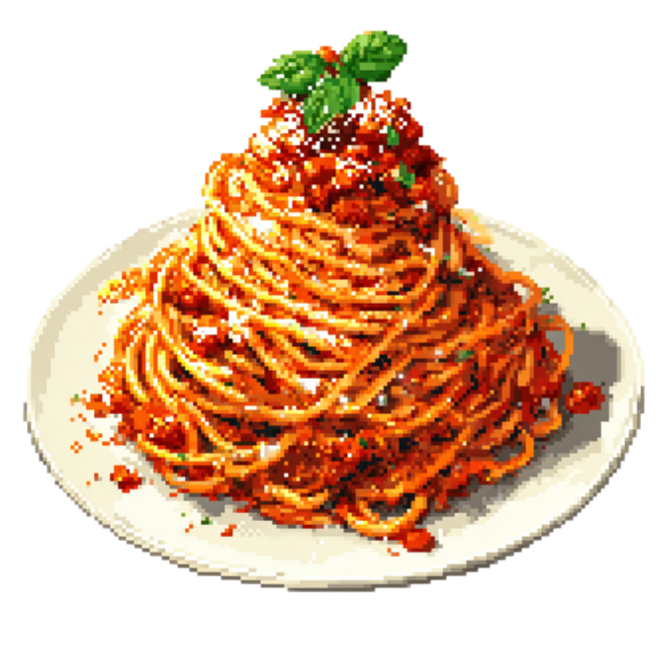
Pixel art of Italian food

Cuisine Guide

Italian Food

A guide to the dishes that built Italian food's global reputation — from Naples' tomato-bright margherita to the funky depth of a four-hour bolognese.

Italian food is regional, not national. There is no "Italian cuisine" the way there's a French one — there are 20 regions and they all argue. Tuscany cooks in olive oil and grills its bistecca rare. Emilia-Romagna ferments cheese in caves and braises pork until it falls apart. Sicily runs on capers, anchovies, and citrus. Naples invented pizza and won't let you forget it. Lombardy uses butter where the south uses oil.

What ties it together is restraint. The best Italian cooking trusts three or four ingredients to do everything — guanciale, eggs, pecorino, and pepper become carbonara; tomato, basil, mozzarella, and fire become pizza margherita. The technique is mostly knowing when to stop. Pasta water is treated like a sauce ingredient. Garlic is often crushed and removed. Cheese is shaved, not buried.

This guide hits the dishes anyone serious about Italian food should know — the platonic versions, not the red-checkered-tablecloth ones. Several of these will be familiar; a few will reset what you think the cuisine is.

12 Iconic Italian Dishes

Track every one in your Nomrade food passport.

Pixel art of Pizza Margherita

Pizza Margherita

Naples' national flag

The original. Created in 1889 in Naples by pizzaiolo Raffaele Esposito to honor Queen Margherita of Savoy, with toppings chosen to mirror the Italian flag — red tomato, white mozzarella, green basil. The dough is high-hydration and slack, slapped out by hand, never rolled. Cooked at 800-900°F in a wood-fired oven for 60-90 seconds, just long enough to leave the crust pillowy with a leopard-spotted char. The toppings are aggressive in their simplicity: San Marzano tomatoes, fior di latte or fresh buffalo mozzarella, a few basil leaves, a drizzle of olive oil, salt. That's it.

Pixel art of Carbonara

Carbonara

Rome's egg-and-pork pasta

Spaghetti or rigatoni, eggs, pecorino romano, guanciale (cured pork jowl, not bacon, not pancetta), black pepper, pasta water. No cream. The technique is everything — egg yolks beaten with cheese off the heat, then tossed with hot pasta and rendered guanciale fat, with starchy pasta water added gradually until the eggs become a glossy, custardy sauce that clings to every noodle. Get the heat too high and you have scrambled eggs. Get it right and you have one of the great five-ingredient dishes anywhere on earth.

Pixel art of Lasagna

Lasagna

Layered pasta architecture

The Bologna-style version is the gold standard: thin sheets of egg-yolk-rich pasta layered with a slow-cooked ragù alla bolognese, béchamel, and grated Parmigiano-Reggiano, then baked until the top sets into a lacy crust. The pasta is often green, dyed with spinach. The ragù simmers for hours with milk and white wine, never tomato-heavy. American baked lasagna with ricotta is a different (and Sicilian-derived) animal — perfectly fine, but a different dish.

Pixel art of Risotto

Risotto

Stirred rice from the north

Short-grain Arborio, Carnaroli, or Vialone Nano rice toasted in butter or olive oil, then bathed slowly in hot stock — one ladle at a time, stirring, for 18 minutes — until the starch releases into a creamy, almost soupy texture ("all'onda" — wavy). Finished off-heat with cold butter and Parmigiano in a vigorous beating called la mantecatura. The most famous version is risotto alla milanese, dyed deep gold with saffron and traditionally served alongside osso buco.

Pixel art of Tiramisù

Tiramisù

The pick-me-up

Italy's signature dessert. Ladyfingers (savoiardi) dipped briefly in espresso, layered with a whipped mixture of mascarpone, egg yolks, sugar, and sometimes Marsala wine, dusted with cocoa powder. No baking. Refrigerated overnight so the layers fuse. Invented in the Veneto region in the 1960s or '70s — exact origins are still disputed between Treviso and Friuli. The name literally means "pick me up," a wink at the espresso and the alleged aphrodisiac properties of the eggs and sugar.

Pixel art of Cacio e Pepe

Cacio e Pepe

Roman trattoria magic

The simplest pasta dish in the world and the hardest to make. Tonnarelli or spaghetti, finely grated pecorino romano, freshly cracked black pepper, pasta water. Off the heat, the grated cheese is whisked with starchy pasta water and pepper into an emulsified, glossy cream that coats the noodles like a sauce. Ratio is everything. Too much heat and the cheese clumps into a rubbery mess. Done right, it tastes like the platonic ideal of pasta itself — sharp, peppery, deeply savory.

Pixel art of Bolognese

Bolognese

Emilia-Romagna's slow ragù

A hand-chopped sofrito of carrot, celery, and onion sweated in butter, then beef and pork browned hard, deglazed with white wine, finished with milk and a small amount of tomato paste, then simmered for at least three hours — sometimes six. The texture is loose-meaty, not saucy. Served over fresh egg tagliatelle, never spaghetti, with a dusting of Parmigiano. It is the inspiration for thousands of weak imitations and one of the few dishes whose authentic recipe is registered with the Bologna Chamber of Commerce.

Pixel art of Osso Buco

Osso Buco

Milanese braised veal shanks

Cross-cut veal shanks dredged in flour and braised slowly in white wine, broth, tomato, onion, carrot, and celery until the meat falls off the bone and the marrow inside the bone becomes gelatinous and rich. Finished with gremolata — a bright topping of minced parsley, garlic, and lemon zest — that cuts the deep braise. Traditionally served with risotto alla milanese on the same plate, the saffron rice soaking up the juices. A dish that takes time, then rewards it.

Pixel art of Gnocchi

Gnocchi

Pillowy potato dumplings

Boiled, riced potatoes mixed with flour and sometimes egg, rolled into ropes, cut into pillows, and rolled across a fork or gnocchi board to give them ridges that catch sauce. The trick is using as little flour as possible — heavy gnocchi are a sin. Cooked for 90 seconds in salted water, just until they float. Sauced traditionally with butter and sage, with a four-cheese sauce, with tomato and basil, or with a simple ragù. Lighter and more delicate than they look on the plate.

Pixel art of Caprese Salad

Caprese Salad

Capri's tricolor salad

Slices of ripe tomato, fresh mozzarella di bufala, and whole basil leaves, stacked on a plate with a drizzle of olive oil, sea salt, and sometimes a grind of pepper. No vinegar — vinegar fights the tomato. Named for the island of Capri and meant to mirror the Italian flag. Only works with truly ripe summer tomatoes and high-quality mozzarella; with lesser ingredients it becomes the saddest plate of food possible.

Pixel art of Bruschetta

Bruschetta

Grilled bread with toppings

Thick slices of country bread grilled or toasted over a fire, rubbed with raw garlic, drizzled with olive oil, and topped — most traditionally — with diced ripe tomato, basil, and salt. The pronunciation, just so you know: "broo-SKET-ta" (the ch is hard). The Tuscan version is just bread, oil, and salt and is called fettunta. From there toppings range across the country: white beans, sautéed greens, salt cod, lardo. A simple use of leftover bread that became one of Italy's defining starters.

Pixel art of Cannoli

Cannoli

Sicily's tube of joy

Crisp fried pastry shells (made with flour, sugar, butter, Marsala, and sometimes cocoa) wrapped around metal tubes and deep-fried, then filled — only at the moment of serving, never before, or the shells go soggy — with sweetened ricotta studded with chocolate chips, candied fruit, or pistachios. The ends are dipped in chopped pistachio or chocolate. A Sicilian specialty originally tied to Carnival, now one of Italy's most exported pastries.

How Italian Eat

An Italian meal is structured. Antipasto first — cured meats, cheeses, marinated vegetables. Then primo, usually a pasta or risotto. Secondo, the meat or fish course, served with a separate contorno (vegetable side). Then cheese, fruit, and finally dolce. Espresso closes it. Cappuccino after lunch is a tourist tell.

Pasta rules are real. Spaghetti bolognese is not a thing in Italy — bolognese is served with tagliatelle, because the wider noodle holds the meat sauce. Carbonara never has cream, only egg, cheese, guanciale, and pasta water. Bread is for the meal, not for dipping in olive oil first. Cheese rarely goes on seafood pasta.

Regional pride shapes everything. Asking a Roman about Bolognese carbonara, or vice versa, will get you a small lecture. The most authentic dishes are tied to a specific town, often a specific street. This is why eating in Italy is best done slowly, one region at a time.

Track Your Italian Food Journey

Nomrade turns every meal into a stamp in your food passport. Snap a photo of the pizza margherita you tried last week, the carbonara on the menu tonight, the dish your friend keeps recommending — and Nomrade marks each iconic Italian dish off your list, unlocking badges as you go. It's a calorie counter, recipe saver, and food journal in one — built for people who think eating well means eating widely.