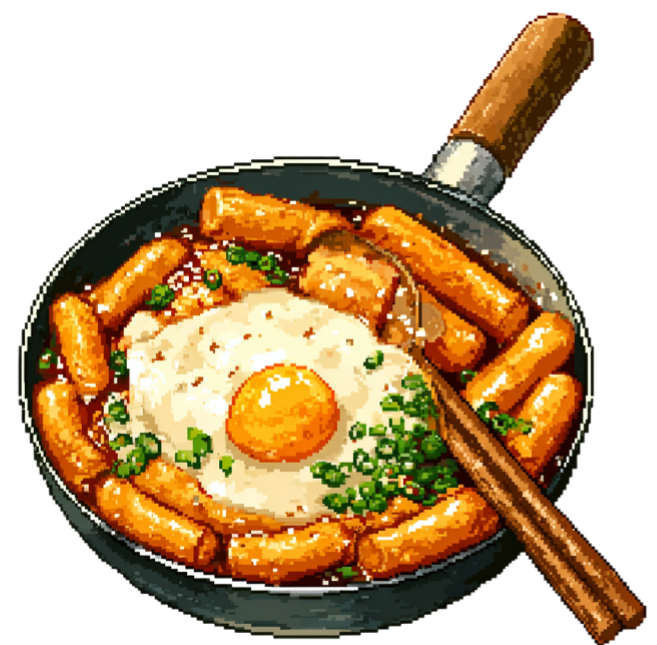
Pixel art of Korean tteokbokki

Cuisine Guide

Korean Food

A field guide to the dishes that built Korean food's global reputation — from fermented kimchi to sticky-charred Korean BBQ.

Korean food is built on contrast. A single bowl of bibimbap brings five colors and flavors into one bite — earthy mountain greens, crunchy bean sprouts, beefy umami, fiery gochujang, the soft yolk of a sunny-side egg. That impulse to balance heat, salt, sour, and sweet runs through nearly every dish on the Korean table.

Two ingredients quietly carry the cuisine: gochugaru, the coarse sun-dried red pepper flake that gives kimchi its glow, and doenjang, a fermented soybean paste with funk so deep it makes Western miso taste polite. Add napa cabbage, garlic, sesame oil, scallion, and short-grain rice and you have the building blocks for hundreds of recipes — from the slow-simmered jjigae stews of grandma's kitchen to the tabletop theater of Korean BBQ.

Modern Korea is also where street food and palace food meet. You can spend the morning eating gujeolpan from a Joseon-era cookbook and the night double-frying chicken with friends over Cass beer. This guide hits the dishes a first-time eater should know — and a few that long-time fans still chase.

12 Iconic Korean Dishes

Track every one in your Nomrade food passport.

Pixel art of tteokbokki

Kimchi

The national side dish

Kimchi is fermented napa cabbage seasoned with gochugaru, garlic, ginger, scallion, fish sauce, and salted shrimp. Left to ferment in earthenware onggi jars (or now, kimchi fridges), it develops a tangy, gassy, almost effervescent funk that sharpens any bite of rice. There are over a hundred regional variants — radish kkakdugi, water-based mul kimchi, summer cucumber oi sobagi — but napa cabbage baechu kimchi is the one most Koreans grew up watching their family make every fall during kimjang.

Pixel art Korean cuisine

Bibimbap

Mixed rice bowl

A bowl of warm rice topped with seasoned vegetables — spinach, bean sprouts, julienned carrot, zucchini, mushroom — plus marinated beef, a fried egg, and a generous spoon of gochujang. Stirred together violently before the first bite. The most prized version is dolsot bibimbap, served in a stone bowl so hot the rice at the bottom crisps into a chewy, golden crust called nurungji. Originally a way to use up small leftover banchan, bibimbap is now arguably Korea's most translatable dish abroad.

Pixel art Korean cuisine

Bulgogi

Marinated beef BBQ

Thinly sliced ribeye or sirloin marinated in soy sauce, sugar, sesame oil, garlic, scallion, and grated Asian pear — the pear is the secret, an enzymatic tenderizer that also sweetens. Cooked fast over a domed grill or on a hot pan, the marinade caramelizes around the edges into something between candy and char. Wrap it in a perilla or red leaf lettuce leaf with rice, garlic, and ssamjang and you have the Korean BBQ table's opening gambit.

Pixel art tteokbokki

Tteokbokki

Spicy rice cakes

Cylindrical rice cakes (garaetteok) simmered in a fiery red sauce of gochujang, gochugaru, sugar, and anchovy stock until the broth coats every chewy log like a glaze. The street version, sold from pojangmacha tents in Seoul, often comes with fish cakes, hard-boiled eggs, and ramen noodles tossed in. The texture is the point — bouncy, sticky, almost rubber-bandy. A teenage after-school staple that's grown into one of K-food's biggest exports.

Pixel art Korean cuisine

Korean Fried Chicken

Double-fried, sauce-glazed

The reason chicken-and-beer (chimaek) became a national pastime. Korean fried chicken is brined, dredged in a thin starchy batter, and fried twice — once at low heat to cook through, once at high heat to shatter the skin. The result is paper-thin, almost glassy crust that stays crisp under sauce. Two classic finishes: yangnyeom, a sticky-sweet gochujang glaze, and soy-garlic, which leans toward umami and brown-sugar caramel.

Pixel art Korean cuisine

Kimchi Jjigae

Kimchi stew

The dish older kimchi was meant for. As cabbage kimchi ages past peak crunch, its sharp sourness mellows into something almost wine-like — perfect stewing material. Simmered with pork belly or canned tuna, tofu, scallion, and a little gochujang in a clay ttukbaegi, kimchi jjigae is the everyday lunch counter answer to "what's good." Served bubbling with a bowl of white rice and nothing else needed.

Pixel art Korean cuisine

Japchae

Glass noodle stir-fry

Slippery sweet potato starch noodles tossed with thin-sliced beef, julienned carrot, onion, spinach, shiitake, and scallion in a sesame-soy glaze. Each vegetable is sautéed separately and combined at the end so nothing turns to mush. Originally a royal court dish, now a fixture at every birthday, holiday, and wedding banquet — the kind of celebratory food that keeps showing up because no one ever tires of it.

Pixel art Korean cuisine

Galbi

Grilled short ribs

Beef short ribs butterflied flat, then marinated in a blend of soy, mirin, brown sugar, garlic, and again that magic ingredient — grated Asian pear. Grilled hot and fast over charcoal at the table. Galbi sits at the higher end of the Korean BBQ menu; the rib bones get scissor-snipped at the table and you eat the meat off them in one motion. Pairs with bibim naengmyeon at the end of the meal to cool things down.

Pixel art Korean cuisine

Samgyetang

Ginseng chicken soup

A whole young chicken stuffed with sticky rice, ginseng root, jujube, garlic, and chestnut, then simmered for hours in a clear, restorative broth. Eaten especially during the three hottest days of summer — known as boknal — under the principle of "fighting heat with heat." The broth is medicinal, ginseng-bitter at first sip, and somehow leaves you feeling like you napped for ten hours.

Pixel art Korean cuisine

Haemul Pajeon

Seafood scallion pancake

A wide, lacy pancake of wheat-and-rice batter loaded with whole scallions, squid, shrimp, and clams, fried until the edges go shatter-crisp. Cut into squares and served with a soy-vinegar dipping sauce sharp with chili. Especially beloved on rainy days — the sound of the batter hitting hot oil supposedly mimics rainfall, which is most Koreans' Pavlovian cue to order one with a bottle of makgeolli.

Pixel art Korean cuisine

Kimbap

Seaweed rice rolls

Often called Korean sushi, but it isn't — kimbap rice is seasoned with sesame oil and salt, not vinegar, and the fillings are cooked. Standard rolls layer pickled radish, spinach, julienned carrot, egg, fishcake, and bulgogi or tuna inside a sheet of gim. Cut into thick coins, packed into Tupperware, and taken on every school field trip and beach day in the country. The portable, don't-think-about-it lunch that nostalgia made famous.

Pixel art Korean cuisine

Sundubu Jjigae

Soft tofu stew

An angry-red, gently roiling stew of silky uncurdled tofu, clams or pork, kimchi, gochugaru, and a raw egg cracked in at the table to half-cook in the heat. Served in a screaming-hot stone bowl that keeps cooking the contents for the first five minutes. The texture flips between custard-soft tofu and the spicy slick of broth — a once-a-week comfort meal in any Korean diner from Seoul to Koreatown LA.

How Koreans Eat

A Korean meal is communal by default. The table is set with rice and soup at every place but everything else — meat, stews, vegetables — is shared. Pulling banchan toward yourself is rude; reaching across with your chopsticks is normal. Banchan are the small side dishes that come unbidden the moment you sit down: pickled radish, seasoned spinach, braised lotus root, fish cake, bean sprouts. Most restaurants refill them for free.

Drinking is its own ritual. You never pour your own soju — someone else pours for you, two-handed if they're younger, and you turn your head away from elders when you sip. Anju, the food eaten with alcohol, is a whole genre: fried chicken with beer, dried squid with soju, jeon pancakes with makgeolli on rainy nights.

Regional differences are sharper than people realize. Jeolla in the southwest is famous for its banchan abundance and seafood. Gyeongsang in the southeast leans saltier and spicier. Jeju Island has its own style around black pork and fresh-caught hairtail. Pyongyang-style cold buckwheat noodles (naengmyeon) trace back to North Korea. Modern Seoul has absorbed all of it.

Track Your Korean Food Journey

Nomrade turns every meal into a stamp in your food passport. Snap a photo of the bibimbap you ate in K-town, the tteokbokki you finally tried at a night market, the kimchi jjigae your friend's mom made — and Nomrade marks each iconic Korean dish off your list, unlocking badges as you go. It's a calorie counter, recipe saver, and food journal in one — built for people who think eating well means eating widely.