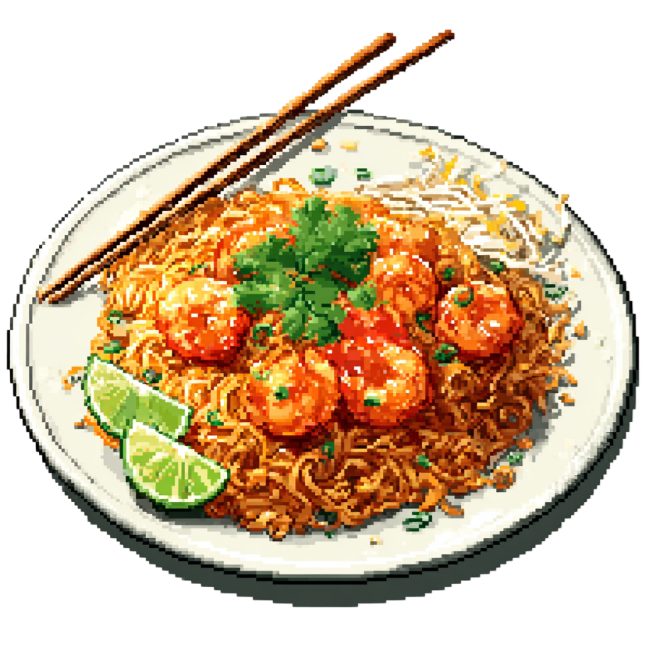
Pixel art of Thai food

Cuisine Guide

Thai Food

From street-cart pad thai to the rich coconut depth of massaman — a guide to Thailand's defining flavors and the dishes that carry them.

Thai food is built around four flavors held in deliberate tension: salty, sour, spicy, sweet. A single bowl of tom yum hits all of them — fish sauce salt, lime sour, bird's eye chile heat, palm sugar sweetness — and the better the cook, the tighter the balance. Pull on any one and the dish goes off-key.

The pantry is small and intense. Fish sauce (nam pla) is the salt of the cuisine. Galangal, lemongrass, and kaffir lime leaves are the holy aromatic trinity. Bird's eye chiles bring the heat. Palm sugar brings the sweet. Tamarind brings the sour where lime can't reach. Coconut milk mellows everything down. Most home dishes can be built from those eight ingredients and a wok.

Regions matter. Northern cooking (Chiang Mai) is meatier and milder, with sticky rice instead of jasmine and dishes like khao soi and sai oua sausage. Northeastern Isaan is the spiciest region, the home of som tam, larb, and grilled meats with sticky rice. Central Thailand (Bangkok) is the curry-and-coconut heartland. The South, near Malaysia, leans even hotter and uses turmeric and dried spice.

12 Iconic Thai Dishes

Track every one in your Nomrade food passport.

Pixel art of Pad Thai

Pad Thai

Stir-fried rice noodles

Thin rice noodles wok-tossed with shrimp, tofu, and egg in a sauce of tamarind paste, fish sauce, palm sugar, and dried shrimp, then topped with crushed peanuts, bean sprouts, scallion, and a wedge of lime. Garnished often with banana flower or dried red chile. Surprisingly young — invented in the 1930s as a national identity dish, championed by the prime minister to reduce rice consumption during a wartime shortage. Now Thailand's best-known export.

Pixel art of Tom Yum

Tom Yum

Hot and sour soup

A clear, fiery broth scented with lemongrass, galangal, kaffir lime leaves, and bird's eye chile, soured with lime juice and salted with fish sauce, then loaded with shrimp (tom yum goong) or chicken and oyster mushrooms. The broth is the entire point — it should hit you with sour, then heat, then aromatics, then sweetness, in waves. A creamy variant called tom yum nam khon adds evaporated milk or coconut milk to soften the edges.

Pixel art of Green Curry

Green Curry

Spicy coconut curry

Made from a paste of fresh green chiles, lemongrass, galangal, kaffir lime, garlic, shallots, coriander root, and shrimp paste, pounded together in a stone mortar until it's a vivid jade green. Cooked in coconut cream until the oil splits out, then finished with fish sauce, palm sugar, and protein — chicken, beef, fish balls, tiny eggplants. Served with jasmine rice or roti. The spiciest of the standard Thai curries; sweet only in the final cooled-off bite.

Pixel art of Massaman Curry

Massaman Curry

Mild, rich southern curry

A southern Thai curry with Persian and Malay roots — you can taste the influence in its dry spice profile of cinnamon, cardamom, clove, star anise, cumin, and bay leaf, ground with the usual Thai paste base of chile, galangal, and lemongrass. Cooked with coconut milk, beef or chicken, potato, onion, and roasted peanuts until everything goes soft and the sauce thickens to a gravy. CNN once ranked it the best food in the world; whether it's that or just one of the great Sunday-meal curries depends on who made it.

Pixel art of Som Tam

Som Tam

Green papaya salad

Shredded unripe papaya pounded in a clay mortar with bird's eye chile, garlic, palm sugar, fish sauce, lime, dried shrimp, and tomato — sometimes with peanuts, long beans, or salted black crab on the Lao-Isaan side. The pounding bruises the papaya so it absorbs the dressing. The result is salty-sour-sweet-spicy in equal measure, with a juicy crunch. Eaten with sticky rice and grilled chicken (gai yang) at virtually every Isaan-style stall in the country. Spicy by default; ask for phet noi (a little spicy) if you want mercy.

Pixel art of Khao Soi

Khao Soi

Northern curry noodles

A Chiang Mai specialty: a yellow coconut curry broth, faintly Burmese in spice (turmeric, cardamom, coriander, curry powder), poured over soft egg noodles topped with a tangle of crispy fried noodles. Served with chicken or beef, a pile of pickled mustard greens, sliced shallot, lime, and chili paste on the side to build to taste. The crispy noodles soften slowly in the broth, giving you a different texture in every spoonful. The dish is a cultural marker of the north.

Pixel art of Pad Krapow

Pad Krapow

Holy basil stir-fry

The default Thai weeknight dinner. Ground or finely chopped meat — chicken, pork, beef — stir-fried over high heat with garlic, bird's eye chiles, fish sauce, oyster sauce, soy sauce, sugar, and a generous fistful of holy basil (not Thai basil, not regular basil — holy basil, which is peppery and slightly clove-y). Served over rice with a fried egg on top, the yolk runny enough to mix in. Made in five minutes. Eaten by everyone.

Pixel art of Larb

Larb

Spicy meat salad

An Isaan dish of finely chopped or ground meat — pork, chicken, duck, or fish — cooked briefly and tossed with toasted ground rice (khao kua, which gives a nutty crunch), fish sauce, lime juice, dried chile, shallots, scallion, and a fistful of mint and cilantro. Served warm or at room temperature with sticky rice. The Lao national dish, claimed equally by Thailand. A version with raw blood is still made in some traditional households.

Pixel art of Mango Sticky Rice

Mango Sticky Rice

Coconut-soaked dessert

Sweet, glutinous sticky rice steamed and bathed in salted coconut cream, served alongside slices of impossibly ripe Nam Dok Mai mango with extra coconut sauce poured over the top and a sprinkle of toasted mung beans or sesame for crunch. The salt in the coconut cream is critical — without it, the dish is cloying; with it, the salt-fat-sweet balance becomes one of the best things you can put in your mouth in a hot climate.

Pixel art of Tom Kha Gai

Tom Kha Gai

Coconut chicken soup

The mellow cousin of tom yum. Chicken simmered in coconut milk with lemongrass, galangal, kaffir lime, fish sauce, lime juice, fresh chiles, and oyster mushrooms or straw mushrooms. The coconut tames the heat into something creamy and almost lullaby-like. Cilantro on top. The galangal is essential — substituting ginger gives a different and lesser dish. A standard order at any Thai restaurant for diners who don't want to cry into their soup.

Pixel art of Pad See Ew

Pad See Ew

Wide noodles in dark soy

Wide rice noodles (sen yai) wok-tossed with chicken or beef, Chinese broccoli, garlic, dark soy sauce, oyster sauce, sugar, and egg. The smoky wok hei is what separates a great pad see ew from a mediocre one — the noodles should pick up burnt-edge char from the screaming-hot wok and slick a little with the sauce. Served with vinegared chiles and crushed dried chile on the side. A Chinese-Thai dish, leaner and earthier than pad thai.

Pixel art of Satay

Satay

Grilled marinated skewers

Strips of chicken, pork, or beef threaded onto bamboo skewers, marinated in turmeric, lemongrass, galangal, garlic, and coconut milk, and grilled over charcoal until the edges char and the meat stays tender. Served with a thick peanut sauce, a sweet cucumber-shallot relish (ajaad), and triangles of toast. Often called Indonesian, but the Thai version is its own thing — sweeter, more turmeric-forward, and almost universally served as a starter. A Bangkok street-cart staple.

How Thai Eat

Thai meals don't have courses. Everything comes out at once and is shared from the center of the table over individual bowls of rice. You serve yourself one dish at a time onto the rice, eat that, then go back. The fork is for pushing food onto the spoon; the spoon goes into your mouth. Chopsticks are for noodles only.

Sticky rice (khao niao) is eaten by hand in the north and northeast — pinched into a small ball, pressed into a divot, and used to scoop up nam prik chile pastes or grilled meats. Jasmine rice (khao hom mali) is used everywhere else. The rice is treated as the meal, not a side; everything else is technically a way to flavor it.

Street food is where the cuisine actually lives. Bangkok's night markets, Chiang Mai's khao soi alleys, Isaan's grilled chicken stalls — these are where the best versions of pad thai, boat noodles, mango sticky rice, and a thousand other dishes happen, made by cooks who have done one thing for forty years. Restaurants are for tourists and air conditioning.

Track Your Thai Food Journey

Nomrade turns every meal into a stamp in your food passport. Snap a photo of the pad thai you tried last week, the tom yum on the menu tonight, the dish your friend keeps recommending — and Nomrade marks each iconic Thai dish off your list, unlocking badges as you go. It's a calorie counter, recipe saver, and food journal in one — built for people who think eating well means eating widely.